
How to repair a damaged skin barrier — the simple way
Tight after washing. Stinging when products touch it. Flaky patches that makeup won't sit on. These aren't random — they're the signature of a damaged skin barrier.
How to tell your barrier is damaged
A healthy barrier is quiet — you don't feel it. A damaged one announces itself: skin feels tight minutes after cleansing, tingles or stings when you apply anything, looks dull and rough, flakes in patches, and reacts to products that never bothered you before. If several of these sound familiar, treat your skin as injured — because, gently put, it is.
Stop the damage first
Repair starts with subtraction, not addition. Pause exfoliating acids, retinoids, scrubs and high-strength actives. Skip hot water — it strips the natural oils your barrier is made of. And resist the urge to buy five 'barrier repair' products at once; piling new formulas on broken skin is how the damage happened in the first place.
Cleanse like you mean it gently
Swap foaming, squeaky-clean washes for something soft and low-stripping. The Oryza Soothing Cleansing Mousse is built exactly for this — a rice-derived, zero-tug cleanse that lifts dirt without taking your barrier with it. Lukewarm water, fingertips, no scrubbing, pat dry.
Rebuild with ceramides
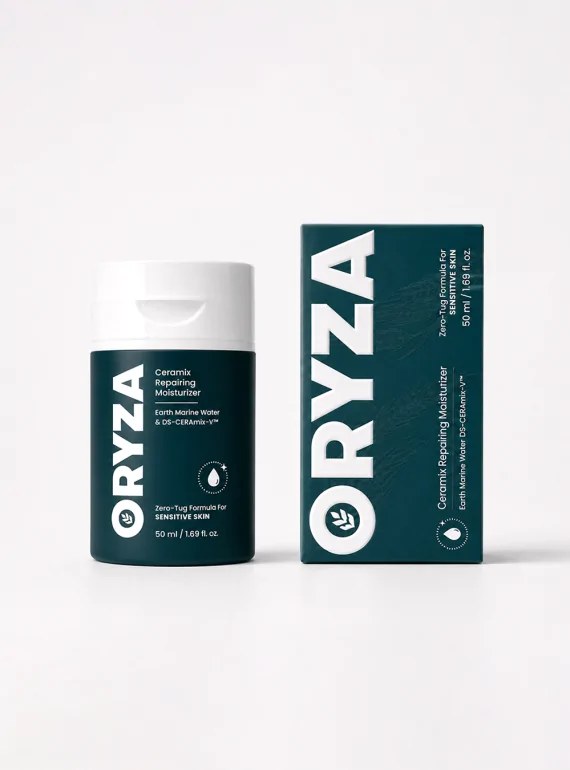
Ceramides are the mortar between your skin cells — the very thing a damaged barrier has lost. Replacing them is the most direct repair there is. Oryza Ceramix Repairing Moisturizer pairs a ceramide complex with mineral-rich marine water to refill the cracks and hold moisture in (补水, properly). Morning and night, on slightly damp skin.
Protect while it heals
UV is the barrier's worst enemy while it recovers. A gentle daily sunscreen like Pearl Tone Up Sunscreen shields the repair work. Keep the routine this small for a month. Calm, comfortable skin is the signal you've turned the corner — and most people see it sooner than they expect.